The Disconnect Between Static Playlists and Dynamic Lives
My investigation began with a personal observation: the rigid structure of conventional music playlists often fails to complement the fluid nature of human emotion. This discrepancy led me to formulate a central design question that guided this project.
Grounding the Concept: Meet Alex
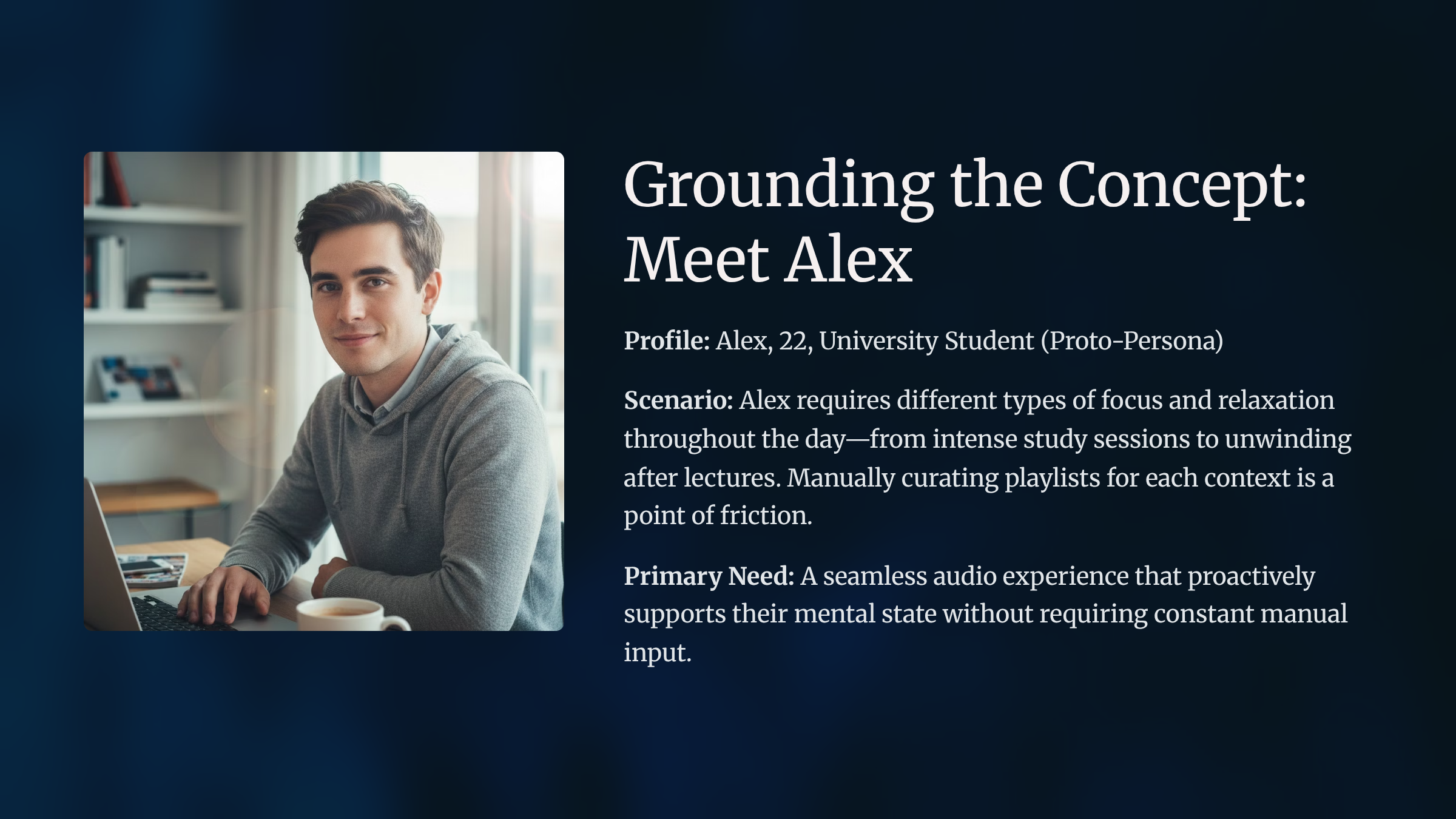
Alex
22, University Student (Proto-Persona)
Scenario: Alex requires different types of focus and relaxation throughout the day — from intense study sessions to unwinding after lectures. Manually curating playlists for each context is a point of friction.
Primary Need: A seamless audio experience that proactively supports their mental state without requiring constant manual input.
My Framework for a Conceptual Project
Structuring the Logic
Before designing any screens, I mapped out the application's complete user flow. This diagram was essential for defining the logic, from initial login to the different paths for mood detection (manual vs. automatic). It helped me anticipate decision points and ensure a coherent user journey.
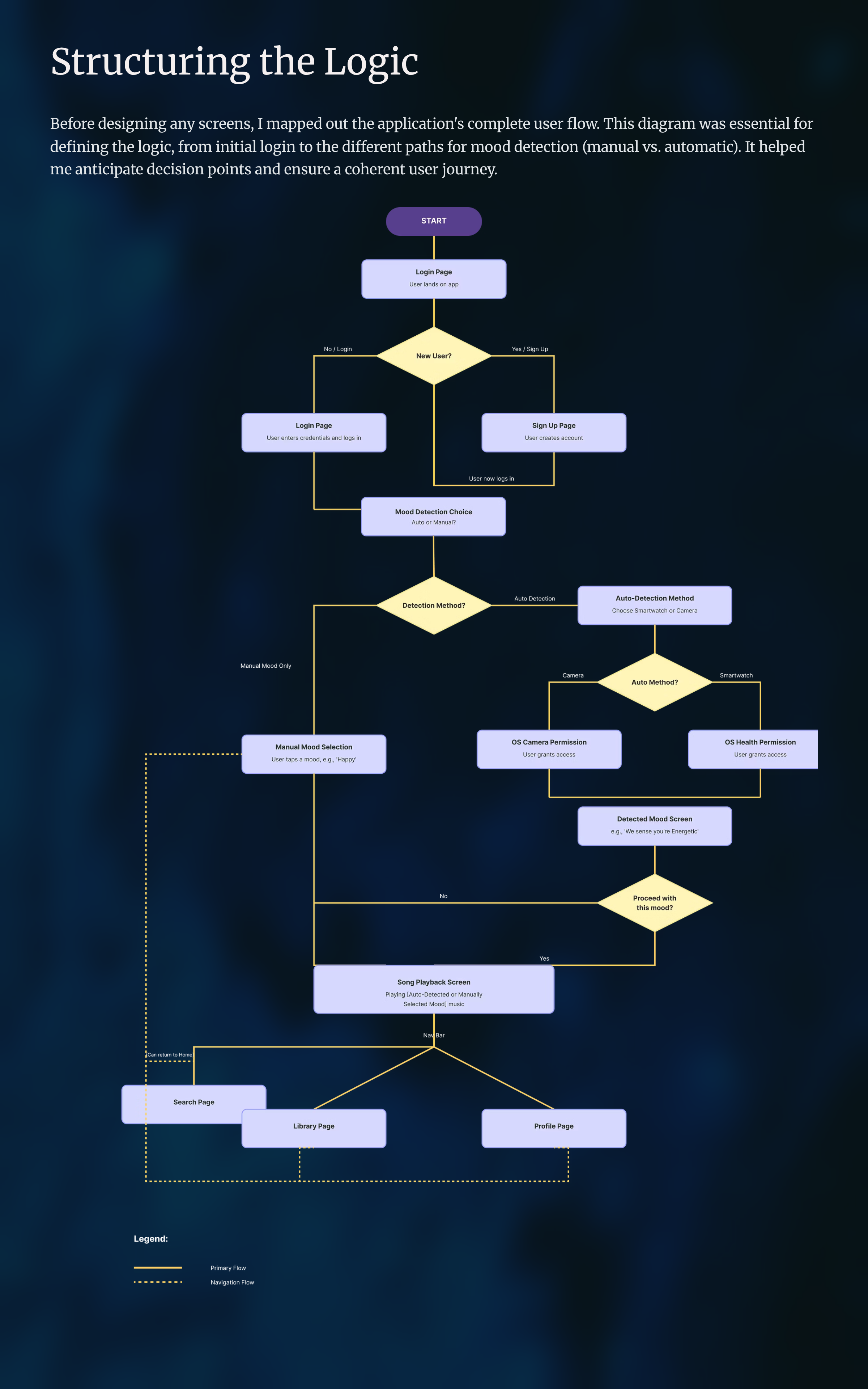
Complete user flow from login to mood-adaptive playback
Designing an Intuitive and Secure Experience
Core Rationale
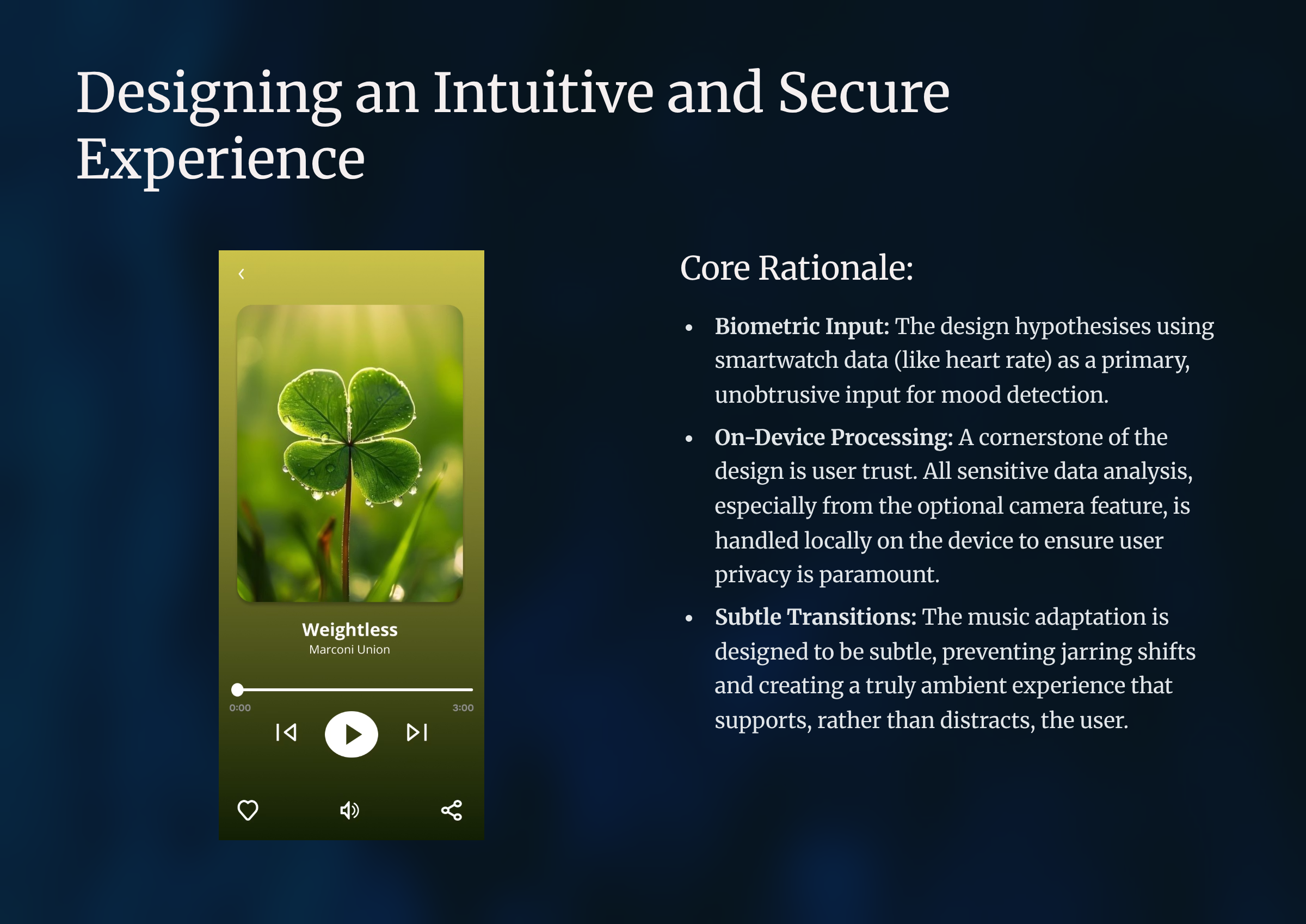
- Biometric Input: The design hypothesizes using smartwatch data (like heart rate) as a primary, unobtrusive input for mood detection
- On-Device Processing: A cornerstone of the design is user trust. All sensitive data analysis, especially from the optional camera feature, is handled locally on the device to ensure user privacy is paramount
- Subtle Transitions: The music adaptation is designed to be subtle, preventing jarring shifts and creating a truly ambient experience that supports, rather than distracts, the user
Building User Confidence from the First Tap
I translated my user flow into a polished, high-fidelity screen flow. It details the complete user journey through the application, from initial onboarding and permission granting to the main music playback interface.
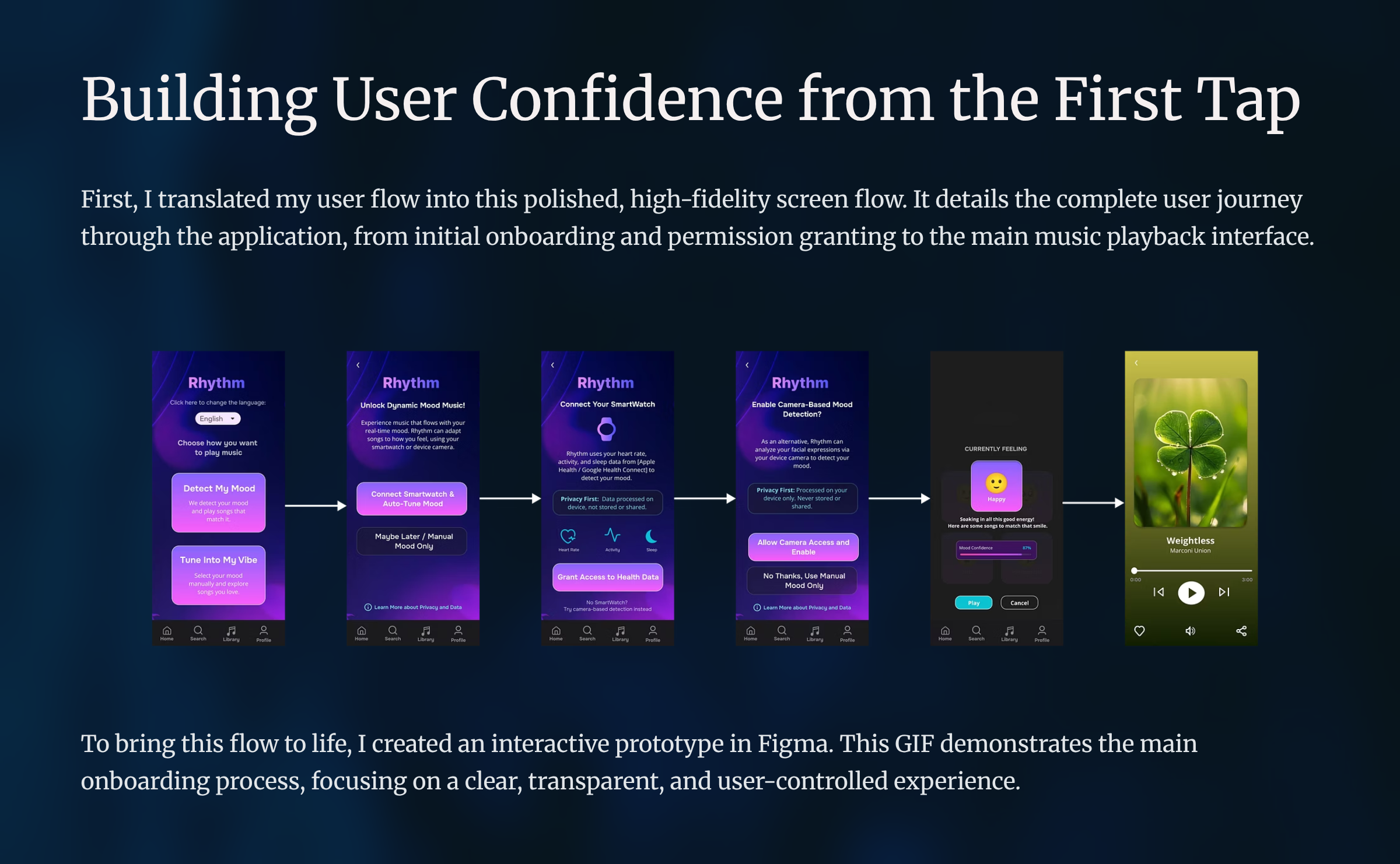
Complete onboarding and playback screen flow
To bring this flow to life, I created an interactive prototype in Figma. This prototype demonstrates the main onboarding process, focusing on a clear, transparent, and user-controlled experience.
Interactive prototype — Rhythm App
Project Learnings and Future Concepts
Personal Reflection
This project reinforced the importance of proactive problem-solving. By anticipating potential user concerns, such as data privacy, I was able to integrate solutions directly into the core design, rather than treating them as an afterthought.
Future Concept: 'Vibe Link'
A logical next step would be to explore the social dimension of music. I conceptualized 'Vibe Link,' a feature to transform listening into a medium for empathetic connection, allowing users to:
- Share Moods: Dedicate a song in response to a shared feeling
- Add Notes: Attach personal messages to shared tracks
- Co-create Soundtracks: Collaboratively build a playlist that adapts to a group's collective mood